


WHAT IS A HEPA FILTER?
“HEPA” is the abbreviation of “high-efficiency particulate air” (filter).so a HEPA filter is a High Efficiency Particulate Air filter. The history of filter is back to World War II, when the Atomic Energy Commission needed a filter to protect researchers from radiocative dust particles that might present a health hazard to them. Filters, whether for an air purifier or other implementation, come with many benefits and claims.
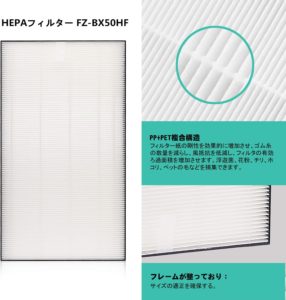
What sets HEPA filters apart from the rest is their claims are more than just claims. Because a true HEPA filter it has to be first be tested and approved, you know exactly what to expect. The Institute of Environmental Sciences and Technology dictates that a HEPA filter must trap 99.97% of particulates 0.3 microns or larger. This does not mean that the filter cannot trap particles smaller than 0.3 microns, because many HEPA filters can; it is simply the threshold that must be reached in order to carry the HEPA name.
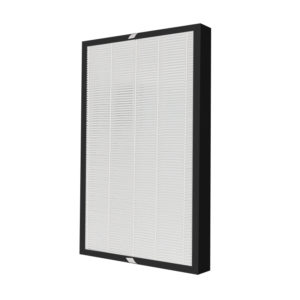
This type of filter is so efficient that, for every 10,000 particles that enter it within its filtering range, only three particles will get through. Surprisingly, HEPA filters become even more efficient the longer they are in use. For this reason, they are used in environments that rely on high clean-air standards, like surgical facilities, tuberculosis wards, NASA clean rooms, and laboratories. They are particularly useful for allergy sufferers.Many imitations filters pervade the marketplace, usually called HEPA-type filters. They are less expensive, rated lower, and do an inferior job of filtering the air. People whose health requires the specific benefits and efficiency of a HEPA filter should check the packaging to make sure the filter is rated at an efficiency of 99.97% for microns 0.3 in size. A real one will be clearly marked.
Cleaning HEPA filters with water, or vacuuming them or bashing them isn’t recommended, as it may damage the HEPA filters fibers. Smart Air tested washing HEPA filters in the Smart Air Lab.
---END---

